
Preserving Investment Momentum
Building wealth through real estate isn't just about buying the right property. It's also about knowing what to do when it comes time to sell.
Some clients intentionally set out to build a real estate portfolio. Others became investors almost by accident. They bought a new home and kept the old one as a rental. Some inherited property from family. Others purchased a duplex or small multifamily property years ago, hoping it would become a solid long-term investment.
Different stories. Different goals.
Yet over time, many of those conversations begin to sound remarkably similar.
“I think it might be time to sell.”
It's a natural thought. Properties age. Neighborhoods change. Life changes.
And after years—or sometimes decades—of appreciation, one question inevitably follows:
“What’s my property worth?”
It’s an important question.
But I don’t think it’s the most important one.
The question I usually ask next is:
That simple question often changes the entire conversation.
Because selling an investment property isn’t just a real estate decision.
It’s a wealth-building decision.
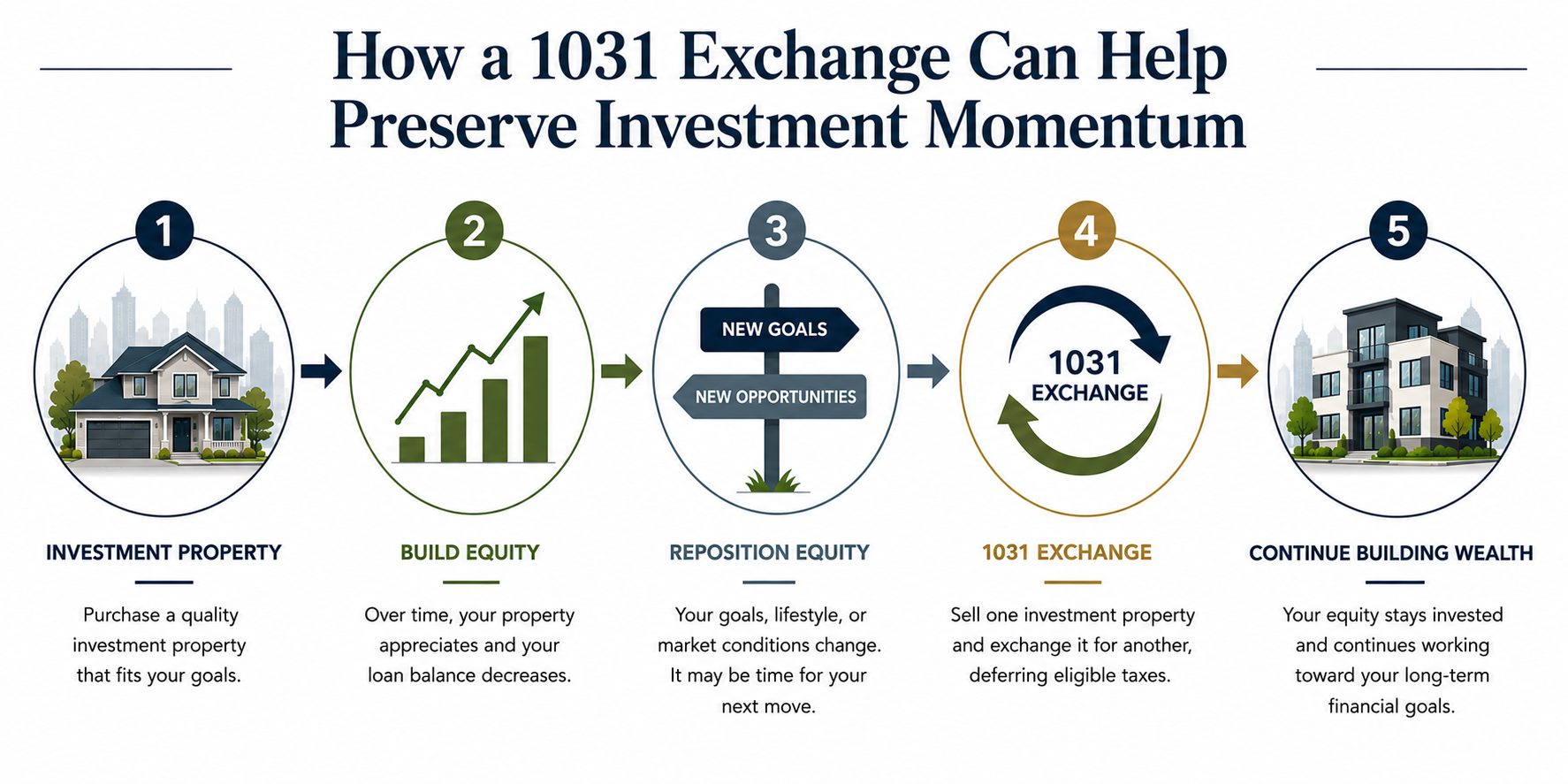
How a 1031 Exchange can help preserve investment momentum.
A 1031 Exchange Is About More Than Taxes
When most people hear the words '1031 Exchange,' they immediately think about tax deferral.
That’s understandable.
But I think it misses the bigger opportunity.
A properly structured 1031 Exchange may allow an investor to defer certain capital gains taxes while exchanging one investment property for another.
The real power isn’t the tax deferral itself.
It’s what happens because of it.
Every dollar that stays invested is another dollar that has the opportunity to continue working—through appreciation, rental income, and future opportunities.
Think of it as a way to preserve investment momentum.
Good Investors Don't Just Build Equity... They Reposition It
Successful investors rarely think of a property as the finish line.
They think of it as the next step.
The rental home that made perfect sense twenty years ago may not be the property that best supports your goals today.
Perhaps you'd rather own a duplex instead of a single-family rental. A fourplex instead of two older homes. A property with stronger cash flow or less maintenance.
The goal isn't simply to own more real estate.
It's to own the right real estate for where you are today.
Every Property Should Earn Its Place
When thinking about selling an investment property, ask one question:
Sometimes the answer is yes.
Sometimes it’s no.
Either way, it’s a worthwhile conversation because your portfolio should evolve as your life evolves.
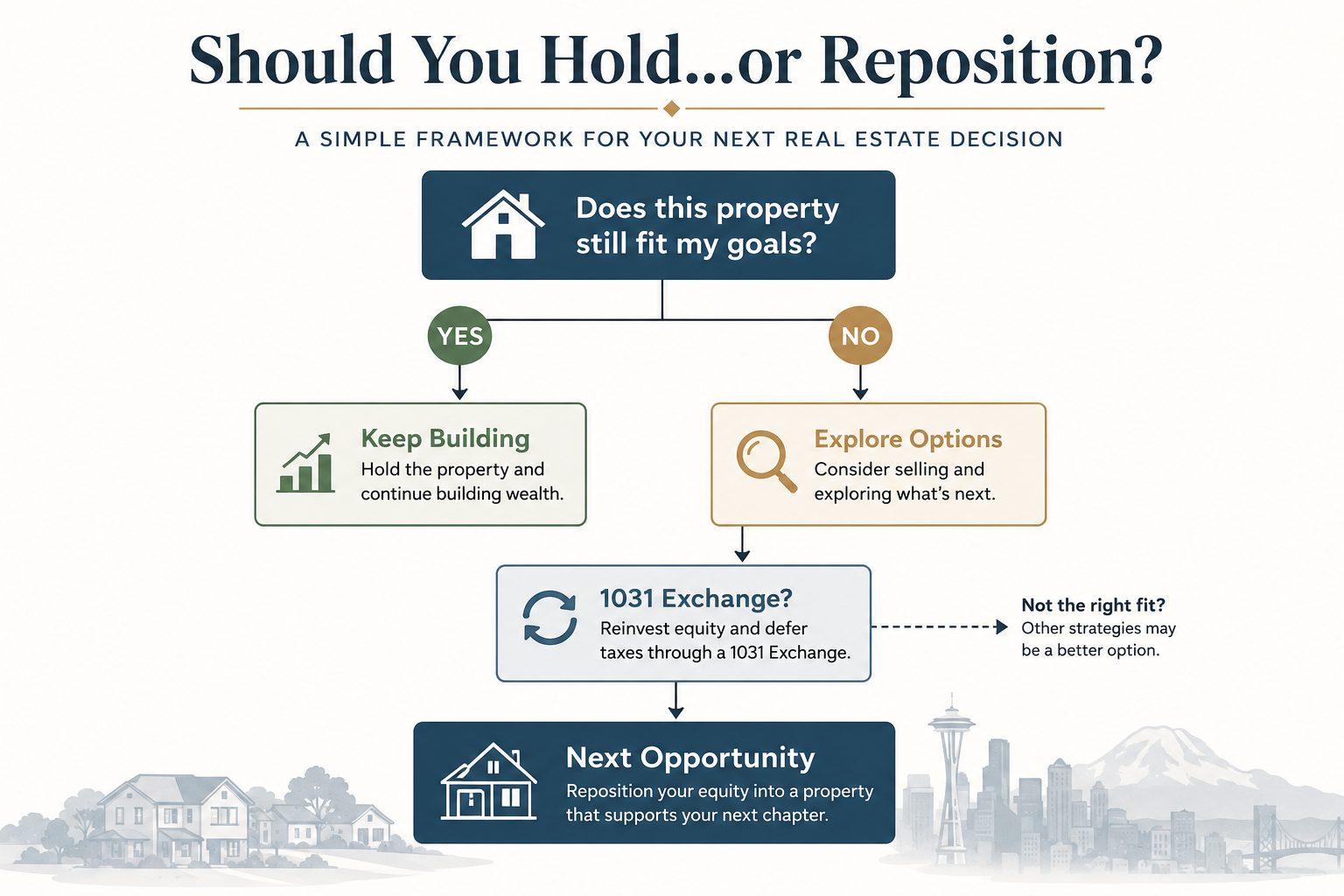
Should you hold...or reposition?
Today's Market
Every market creates opportunities.
Today's environment has slowed enough that buyers once again have something that was difficult to find just a few years ago:
Time.Time to compare.
Time to negotiate.
Time to think.
Building wealth has rarely depended on perfectly timing the market.
It’s usually the result of making thoughtful decisions and giving them time to work.
Final Thoughts
A 1031 Exchange isn't the right strategy for every investor.
Sometimes the best decision is to hold.
Sometimes selling and paying the tax makes perfect sense.
But understanding your options before making that decision is almost always worthwhile.
Because the best investment decisions usually aren't about selling real estate.
They're about deciding what you want your equity to do next.
Let's Explore Your Options
Whether you're considering selling an investment property, purchasing your first rental, or simply evaluating what's possible, we’d be happy to have a conversation.
Sometimes the answer is to hold.
Sometimes it's to sell.
Sometimes it's to exchange.
The important thing is making that decision with a clear understanding of your options.
Explore Your Options